The choice between varnish, oil, and wax on wooden floors is one of the most common questions we face. Here's our honest comparison.
The Three Main Choices
Lacquer/varnish, hard wax oil, and Danish oil are the main options for finishing wooden floors. Each has its own look, feel, durability, and maintenance requirements. The right choice depends on how the room is used, the species of timber, and the look you want to achieve.
Lacquer and Varnish
Lacquer forms a hard, protective film on top of the wood. It's the most durable option — suitable for high-traffic areas like hallways and kitchens. It looks more polished and formal. Water-based lacquers are almost invisible (no amber tone) and dry quickly. Oil-based lacquers amber slightly and give a warmer, richer look. The downside: when it wears, it wears in patches and needs a full resand to restore.
Hard Wax Oil
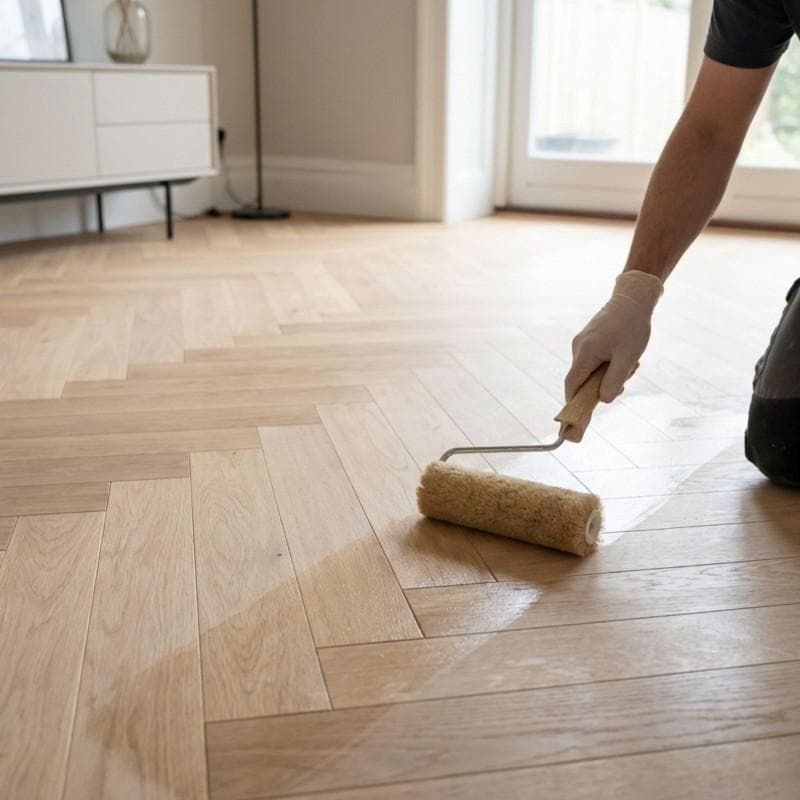
Hard wax oil penetrates the wood rather than sitting on top of it. The result is a more natural, matte finish that feels like bare wood to the touch. It's easier to maintain — small scratches can be treated locally rather than requiring a full resand. Annual or biannual maintenance with a maintenance oil keeps the floor looking fresh. Popular for living rooms, bedrooms, and period properties where a natural aesthetic is important.
Danish Oil
Danish oil is a penetrating oil similar to hard wax oil but less durable. It's best suited to lower-traffic areas and provides beautiful grain enhancement. It does need more frequent maintenance than hard wax oil. We generally recommend hard wax oil over Danish oil for floors as it offers better protection.
Our Recommendation
For most London homes, we recommend hard wax oil for bedrooms and living rooms (natural feel, easy maintenance) and water-based lacquer for hallways, kitchens, and playrooms (maximum durability). We can show you sample boards of each finish so you can feel and see the difference before committing.
Related Services