Limewash is having a major moment in London interiors. We explain what it is, how it works, and whether it's right for your home.
What is Limewash?
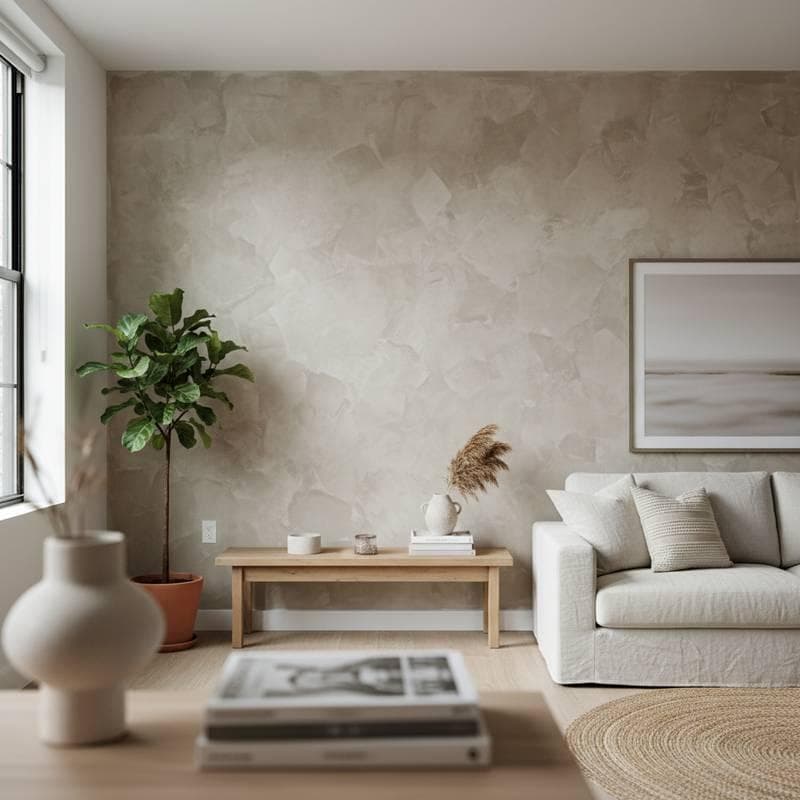
Limewash is a paint made from slaked lime and water, sometimes with natural pigments added. It has been used on buildings for centuries and creates a distinctive, softly variegated, chalky finish that changes with the light. Unlike standard emulsion, limewash is slightly transparent — it soaks into the surface rather than sitting on top of it.
The Limewash Look
Limewash walls have an organic, imperfect quality — areas of slightly different opacity that shift as light moves across them. This is considered a feature, not a flaw. It suits period properties, rooms with natural materials (stone, timber, terracotta tiles), and contemporary spaces that want warmth and texture without pattern.
Is Your Surface Suitable?
Traditional limewash works best on porous, breathable surfaces: bare plaster, lime plaster, brick, and stone. For standard plastered walls in modern homes, use a limewash-effect product (Frenchic, Annie Sloan, or specialist decorating brands offer these). These achieve the same look without requiring a naturally breathable substrate.
Application Technique
Limewash is applied in multiple thin, diluted layers, each dried before the next. The painter works in broad circular and crosshatch strokes, varying pressure to create the characteristic variation. This is not a DIY-friendly technique — the key is knowing how much dilution to use for each coat and when to stop. Applied incorrectly, it looks patchy rather than intentionally textured.
Colours and Costs
Natural limewash is available in a range of earthy tones: white, cream, buff, grey, and terracotta are the most common. More recently, deeper colours — dusty pink, sage, terracotta red, charcoal — have become available from specialist suppliers. A single limewash feature wall in a London home typically costs £200–£400 for labour and materials depending on ceiling height.
Related Services