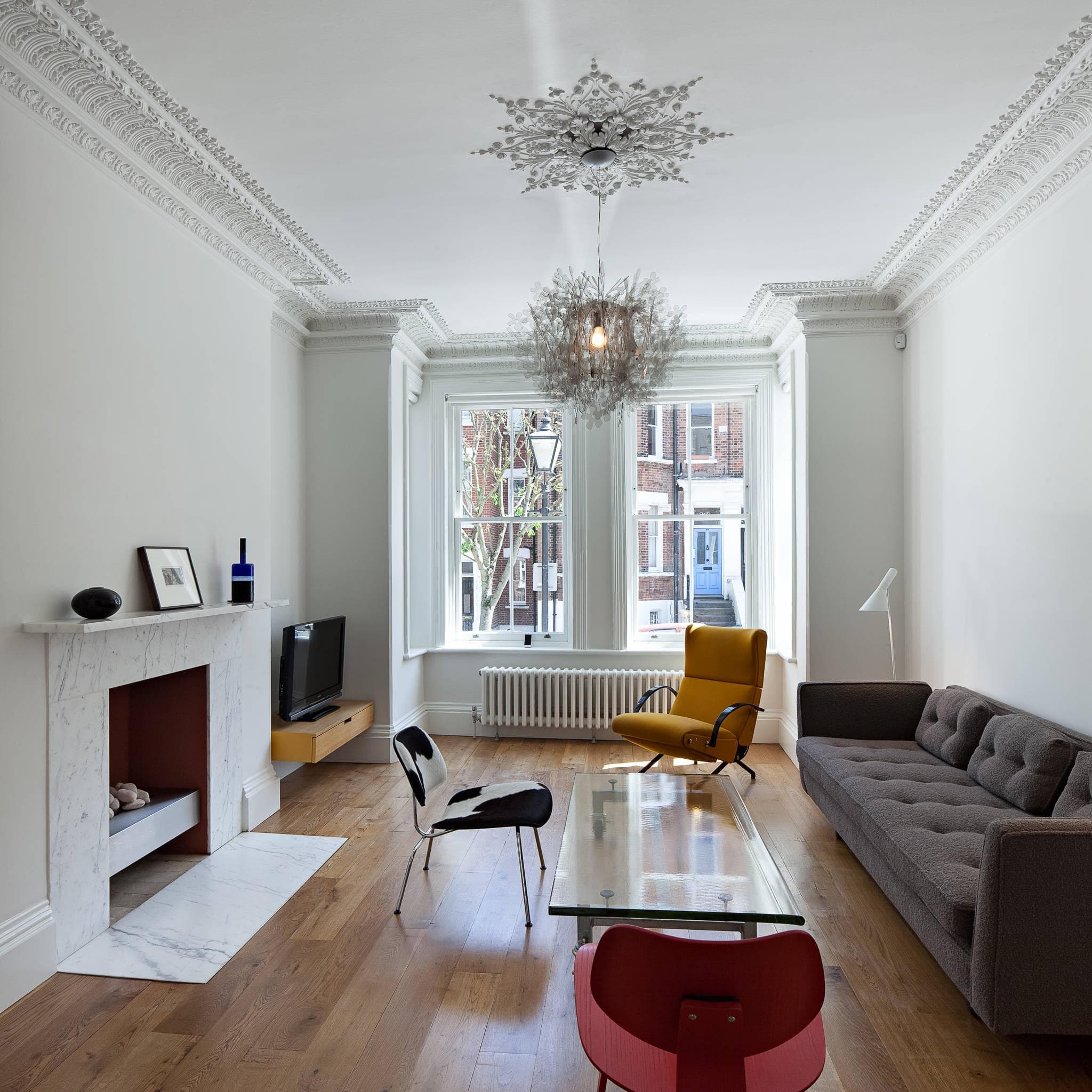
Period plaster cornicing is one of the most beautiful features of Victorian properties — and one of the most frequently damaged. Here's how we restore it.
Why Victorian Cornicing Gets Damaged
Original Victorian plaster cornicing was made from lime plaster or fibrous plaster, set in place over jute scrim. Over a century, the fixings can loosen, the plaster can crack, and sections can drop or be removed entirely. The biggest enemy is heavy-handed DIY decorating — repeatedly painting over cornicing without cleaning it first builds up thick paint layers that obscure the detail and add significant weight.
Stripping Versus Restoration
Before restoring, we strip the cornicing back to bare plaster (sometimes many coats of old paint). This is done carefully with hot-air tools and specialist scrapers to avoid damaging the plaster relief beneath. Cleaned back to the original plaster, the detail re-emerges — often surprisingly intricate. In most cases, the surviving cornicing is restored and only missing sections are replaced.
Replacing Missing Sections
For missing or heavily damaged sections, we can cast a mould from an existing intact section and make a new piece in fibrous plaster. For standard Victorian profiles, matching sections are available from specialist suppliers like Stevensons or Locker & Riley. We cut and fit the new section with lime putty adhesive and glass fibre reinforcement, matching the original profile exactly.
Painting Cornicing Correctly
New or restored cornicing should be sealed before painting. We use a shellac-based primer on bare plaster to prevent absorption, then apply two thin coats of vinyl matt white. The key to beautiful cornicing is thin paint — applied in diluted layers with a small brush, working the paint into the relief detail without bridging the crisper edges. Heavy-bodied emulsion applied with a roller is what destroys the detail over time.
How Much Does Cornicing Restoration Cost in London?
Stripping and repainting existing cornicing in one room is typically £200–£400 depending on the perimeter length and the complexity of the profile. Replacing a missing section adds £100–£300 depending on the length and whether mould-making is required. A full restoration including ceiling rose is typically £600–£1,200 for a period living room.
Related Services