Garden fences, gates, and external timber need regular treatment to survive London's wet winters. Here's the right approach.
Paint vs Stain for Garden Fences
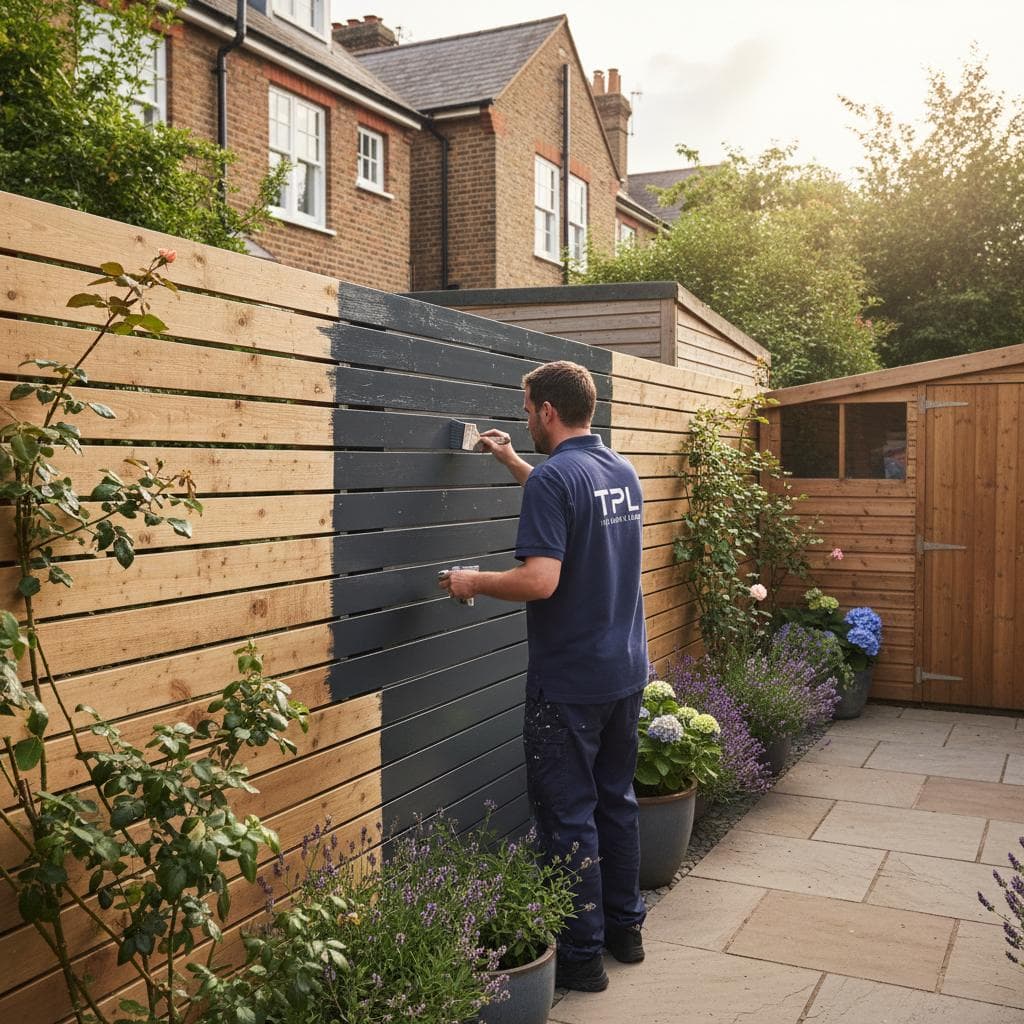
Garden fences can be treated with either opaque paint or a semi-transparent stain/preservative. Paint gives a more finished, decorative result — good for close-board fences in visible garden positions. Stain/preservative penetrates the wood rather than sitting on top, making it more durable in exposed positions and easier to maintain. Both have their place; the choice depends on the fence style and how visible it is.
Preparing Timber for Exterior Painting
Exterior timber preparation is more demanding than interior. Any rotten sections must be cut out and replaced — painting over rot delays but never fixes the problem. Wire-brush off any peeling old paint, sand smooth, and apply a preservative primer. On new timber, a pressure treatment (tanalising) is the best foundation, followed by a primer before any decorative coat.
Best Products for London's Climate
London's climate — frequent rain, mild but damp winters, occasional hard frosts — requires flexible, water-repellent coatings. Cuprinol Garden Shades and Ronseal Fence Life Plus are reliable consumer products. For trade applications, we use Sikkens and Owatrol products that penetrate deeply and offer 3-5 year warranties. Dark colours (dark grey, charcoal, navy) have become popular for garden fences as a backdrop for planting.
Timing and Frequency
Apply exterior timber treatments in dry weather (at least 48 hours dry before and after application) between April and September for best results. Timber exposed to full weather in London's climate should be retreated every 2-3 years for stains and preservatives, and every 4-6 years for paint. Inspect annually and treat any damaged areas promptly to prevent rot taking hold.
Related Services